
EPISODE 122: The SNU: A New Direction with Julia Almond
Jul 16, 2026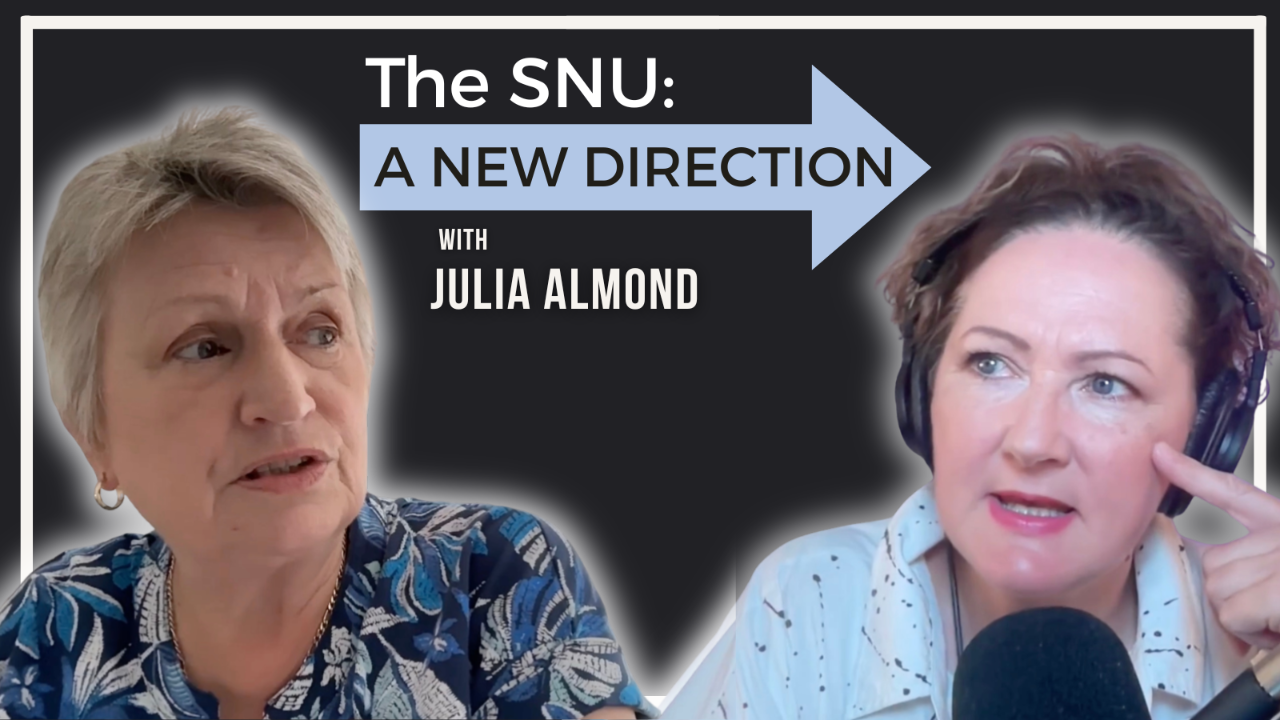
The SNU: A New Direction
A conversation about leadership, standards, and the future of Spiritualism. In this episode of Psychic Matters, I sit down with Julia Almond — ordained SNU Minister, accredited medium, and a candidate for the presidency of the Spiritualists' National Union — to talk about where the Union has been, and where it could go next.
Julia brings a rare combination to this conversation: decades in senior leadership, from headteacher to Director of Children's Services, alongside a lifetime of service within the SNU itself — as church president, Finance Director, Vice President, and across District and National Council. We talk governance, education, healing, and what it actually takes to lead an organisation of this scale well.
Whether you're a lifelong Spiritualist, new to the movement, or simply curious about what it means to lead with integrity, this is a conversation worth your time.
What You'll Learn in This Episode:
- Julia's personal journey into Spiritualism, and what drew her to ministry
- What decades of leadership in education and local government taught her about running large organisations
- Her priorities for governance, transparency, and trust within the SNU
- Why education — for members, for schools, for the wider public — sits at the heart of her vision
- Her plans for Spiritualist Healing and how it could be championed more widely
- Her hopes for the Arthur Findlay College and its future within the movement
- How she believes the SNU should listen to, and make use of, the skills of its own membership
- The legacy she hopes to leave, if elected
This Week’s Episode
Episode 122 Resources
Julia Almond Links:
https://www.facebook.com/minister.julia.almond/
https://www.snu.org.uk
Ann Theato’s Links:
Website: anntheato.com
Podcast: Psychic Matters Podcast
Patreon: Support the Podcast
Social Media:
Instagram: @psychicmatters
Twitter: @Psychic_Matters
Facebook: Psychic Matters Community
YouTube: Psychic Matters Channel : https://www.youtube.com/@psychicmatters/videos
Music Credits:
"Reach" by Christopher Lloyd Clarke. Licensed by Enlightened Audio.
Other Links:
Leave a Review: Psychic Matters on Podchaser
Buy Ann a Coffee: Support Ann on Buy Me a Coffee
BOOK A READING: https://anntheato.com/book-a-session/
JOIN A COURSE: https://anntheato.com/online-courses-and-events/
DECKIBLE: https://www.deckible.com/card-decks/13d-focus-cards-inspiration-for-daily-focus-ann-théato
Ann Théato, Psychic, Medium and Spiritual Tutor, investigates psychic development, mediumship techniques, and paranormal science, so that you can come to understand your own innate psychic ability and expand your knowledge, whilst learning to develop a curious mind.
**PROUD TO BE NUMBER ONE WORLDWIDE!**
**PROUD TO BE AWARD-WINNING "BEST PSYCHIC PODCAST" in the PARAPOD podcast awards
Transcript
VO: Psychic Matters with Ann Théato. The top ranked spirituality podcast.
Ann
Hello, I'm Ann Theato and welcome to Psychic Matters. Spiritualism is one of the most fascinating and distinctive spiritual movements in the world. At its heart is a simple but profound belief that consciousness survives physical death and that communication between this world and the next is not only possible but evidential. It's a religion, a philosophy, and a science all at once, and for millions of people across the globe. It has brought Comfort, meaning, and a completely different relationship with what it means to be alive. In the United Kingdom, the body that has held and shaped organised Spiritualism for over a century is the Spiritualists' National Union, the SNU. Founded in 1901, it supports hundreds of churches and centres across the country and trains and qualifies mediums and healers and represents Spiritualism as a recognised religion. Over a century of churches, communities, education and ministry. And yet it's only in recent years that Spiritualism has been represented at the National Memorial Service at the Cenotaph in Whitehall, taking its place alongside every other major faith in this country, a long overdue acknowledgement of a movement that has been quietly, steadfastly present for generations. At its heart sits the Arthur Findlay College, widely regarded as the world's foremost college for the advancement of Spiritualism and psychic science. My guest today is a candidate for the presidency of the SNU. Her name is Julia Almond, an ordained minister and accredited medium with qualifications spanning healing mediumship, teaching and Assessment and administration. She has served the SNU at every level as vice president on National Council, as finance director, as church president, and through ongoing work with districts and churches across the country. She brings to this moment a rare combination, deep financial literacy, a rigorous understanding of charity law and governance, educational passion, and a profound personal commitment to Spiritualism, to its healing work and to its ministry. Julia Almond, welcome to Psychic Matters.
Julia
Thank you, Ann, and thank you for the invite.
Ann
It's so lovely to have you here, Julia. And for anyone today who's listening who maybe has never encountered Spiritualism and what it is and what it can genuinely offer someone, what what can you tell them about that?
Julia
Spiritualism can offer an understanding of life's purpose and also a sense of belonging in a community, whether it's inside a church or centre or online, because we do have a number of online communities as well. It provides a space for personal spiritual development opportunities for learning and for growth and a sense of belonging. inside an international movement and opportunities for active involvement. We are a religion, we believe in God and we believe that each individual has that divine link with the creator themselves, a link which can be explored and deepened. For we understand that we are each spirit inside a physical body and that spirit actually continues on after our physical body leaves us and continues to grow in the spirit world. So, we have personal responsibility for how we grow and develop our own spirits, the choices we make, the decisions we follow, the things we say, the things we do. We believe very strongly that we each have personal responsibility. And the wonderful thing is that we have opportunities within our churches and centres to explore this more fully. So, our services often include evidential communication from the spirit world, but also prayers to God, to our Father God, songs, hymns, inspirational speaking because Our philosophy based around the seven principles is absolutely beautiful and it's this that helps us understand our place in the world and it's a code of values to actually live by. Spiritualist healing also very important part of what we are about. It may take place actually within our divine services which are often on a Sunday but not always but also, we have separate special healing services as well. But at its heart, Spiritualism is about eternal progress, learning and following a spiritual pathway and being spirit led through our lives.
Ann
That's such a beautiful explanation, Julia. Thank you so much. And when you think about it yourself, you know, from a personal perspective, what drew you personally then to Spiritualism and how has that maybe shaped your life?
Julia
It has shaped my life tremendously because it is a code of values that I live by. But I came across it by accident. I hadn't known anybody who was a Spiritualist. It took me to visit Australia and interview an educationalist about how to teach history to actually find out about Spiritualism because she had been involved in a home circle. She lent me some of the information, the teachings that had come from this home circle. and as I sat this weekend we were camping in front of the Blue Mountains and were wallabies around and I was reading this philosophy and it just clicked with me and I thought this is exactly what I believe, this is what I want to find out more about. So, when I came back to the UK, I went to a psychic fair I went to an evidential medium, I bought a book of Silver Birch. She gave me a great message, but then asked me about my interest in philosophy. So, I explained that I found some information from our home circle. And she said, well, that's interesting because I visited Australia. I attended a home circle. I've had the information to read. And when we explored it, it was the same home circle.
Ann
No!
Julia
So, you what are the chances of that that two people, you know, in Leeds have attended the same home circle in Melbourne? And I said, wow, that's a coincidence. And she said, you think that's a coincidence. But certainly, that encouraged me on the way to find out more about Spiritualism. So that's how I started. And when I went to my first Spiritualist church, I just felt, yeah, I belong here. I love the teachings, I love what it's about, I love the sense of community and I want to explore more fully.
Ann
Gosh, it's beautiful. What a brilliant story. I absolutely love that. That's just amazing. And that's does continue to be an amazing thing, doesn't it? We have all these synchronicities in life that we're like, whoa, this is that life can be so beautiful and so aligned sometimes. But I know within Spiritualism, Julia, you were drawn specifically to ministry. So, what what why were you drawn to ministry and what does that mean to you specifically?
Julia
Well, my progress through Spiritualism has been incremental. I've sort of started out and become involved on church committees, I think three different church committees, and then as president. It's almost as if, as I've learned and as I've explored more, I've wanted to take the next step forward. And I very much wanted to share with people what I have gained from Spiritualism. and to be a greater ambassador for Spiritualism. And particularly when I became president of a church, I wanted to be able to act as a minister for the people in the church, the beautiful community that we had in Stafford. And it was my great privilege then, following on from the training within the union, to take part in those great life events, know, the blessing of a young child, you know, a wedding, sadly a funeral, but those key moments in people's lives to be able to assist and smooth the way and help people and understand the spiritual view of life through those life events was a tremendous privilege, no doubt about it. So, really, I wanted to be a greater ambassador for Spiritualism. I wanted to be able to help people and to share what I had learned more. and it was lovely that when I became Vice President of the Union, I had responsibility of the Ministry Development Committee and was able to review the curriculum and together as part of a great team we rewrote the curriculum and the training for the Ministry and I really really enjoyed that, that working together as a team.
Ann
That's so interesting. Mm Vice President of the Ministry Development Committee, I think you just said, rewriting the curricula for the ministry, that's just amazing. And of course, I know before this interview we had a little bit of a chit-chat about your background and I know it's extensive, your professional leadership, your management experience. I mean it's outstanding. For those obviously who didn't who weren't party to our private conversation, can you tell us a little bit about your background there in your leadership and your management?
Julia
I started out my professional life in education. I was a history teacher and then became head of careers and deputy head of a multicultural school and then head teacher for nine years of a secondary school in Staffordshire, which I loved. I loved being part of that community and leading the community and working through teams to actually make a difference for young people and for the staff.
I loved that role. And then I moved into local authority work and became Deputy Director for Children's Services and then Director of Children's Services. So that was different but interesting as well because we're very much working through senior managers and encouraging people to be good at what they did to actually to learn and to grow but to be actually great at leadership themselves. It was the concept of collegiate leadership, if you like, and being very aware of the role model that you are in terms of your own values and professionalism, but also being able to encourage others to be good leaders too, and to be great at their job without too much interference from me, but to actually delegate and see them grow and be successful. So, it's been wonderful really to have those experiences and to learn from it and to be able to empower others to learn and to grow.
Ann
I think that's brilliant. I love that about a good boss or a or a good head. You know, someone who really wants to encourage you and see your greater potential. For you to see the potential, I think, within yourself. I think that's just such a beautiful quality in somebody. And I know that, you know, you've just explained there about your head and deputy head and all of the that leadership experience. That's that's on a serious scale. So, what did those roles teach you then about what it actually takes to lead a large complex organisation?
Julia
Lots. It's essential to actually build that shared vision together, to work with people and to grow that sense of shared priorities which we can all pull together behind to be able to move the organisation forward. And leadership is very much about empowering others. It's about getting the best out of people, showing respect for everybody and delegating, encouraging, building a fair and inclusive community where people feel that they trust and respect the leader and the organisation and feel they can be committed to it. So important really that we do ensure that the shadow we leave behind us as leaders is one which everybody would aspire to.
Ann
think that's beautiful. Getting the best out of people was the one that really touched me there out of all the things that you said. I just think people don't really understand either how much potential they have and how good they could be if they were just encouraged a little bit. So, I think that's really beautiful.
You know, Julia, you've also served the SNU itself at every level. You've been church president across several congregations, president of the West Midlands District Council, on the North Yorkshire District Council, on National Council, Finance Director you've worked at, and vice president. So that's an extraordinary range of experience. What has that journey given you, Julia, in terms of your understanding and your love of the SNU?
Julia
I've loved meeting a range of different people. I've been on different committees. I was president just of the one church at Stafford. But it's been an amazing journey and one which I've taken each step at a time. And it's very much about building community, I feel, at church level particularly, but also at district, bringing churches together to be able to share good practice and learn from each other because... our churches are, as you know, separate charities in their own right. And sometimes it can be quite a lonely job in a committee. And it's so important that our umbrella organisation, the National Union, actually, you know, provides a safe and secure environment for those churches and do what we can to help and promote those churches to be thriving spiritual communities. And for myself, you know, I do think it's very much about caring for one another. I've found somewhere where my values fit. It's about the brotherhood of man. It's about looking after each other. Everybody's equal, you know? It's about taking responsibility for our own actions wherever we are and also making sure we have those chances to keep learning and growing and to be inclusive in what we're about as well. You everybody's welcome and the main aspect of it is those opportunities. for spirit growth and to be spirit-led.
Ann
Yeah, beautiful. Thanks, Julia. And of course, the SNU, this possibly a little bit controversial here, but the SNU is a multi-million-pound organisation, is it not? And in any other sector, we've got a selection process for a leader of an organization of that scale. And in a outside there in the business world, it would involve, if you were going to get a leader for that business, multiple stages, rigorous interview panels, detailed assessments of leadership. Capability, all that sort of thing. At the moment, the SNU's bylaws allow individual members to elect their president by popular vote. So, I would argue that it is vital in my eyes that whoever steps into that role brings a proven track record of managing large organisations, managing budgets, managing people, being very good at strategy. Julia, how important is that to you?
Julia
We are a unique organisation in that we're a charity and also as you know a company limited by a guarantee and our chair of the board of trustees also acts as the CEO of the company. So it's a huge role and you know I've been for interviews for large roles where I've had three days of going through a selection process to make sure that my skills match that person's specification and I think going forward, I'm not sure a chair of a board of trustees should be paid anyway for what they do, but we got the permission because of the executive function as well. But think going forward it may be something that the union wants to look at to ensure that we do have people with the right skills in the right roles.
Ann
Hmm. Thank you. And Julia, if you are elected by the members, what are your three core priorities from day one? What you're going to do first when you sit in your office chair on your first day at work?
Julia
Communication is vital, so I think we've got to start as we mean to go on by showing we want to listen to everybody's points of view. What do they think is great about the Union? What do people think we need to work on to improve? We need to build trust and confidence back in our Union so people feel safe and secure and can feel committed. to working forward together. We need to ensure we have shared priorities for Vision 2030 and work together to build that vision in order that we can all get behind it and in order that we can make a difference. We need Spiritualism to be more understood outside of our own doors. I was out with some friends the other day and people I didn't know very well. But when I talked with them about Spiritualism, their first response was, Ouija board. And that's not their fault. It's our fault because we've not encouraged people to or given people the opportunity to find out about Spiritualism. So, you know, I think we've got a job to do within the movement, first of all, to build trust, to build confidence, to show that we are a fair and inclusive organisation, to encourage those high-quality learning opportunities.
To put spiritual development at the heart of what we're about, to promote healing, I will be that absolute representative and hero for healing to make sure that we move that forward. But it's really good then that what we need to do is talk with people to make sure we're on the same page and to be able to take it forward. So yeah, it will be talking to the staff we're employed. to talk with them initially in the first couple of days. Definitely you'll need to create those good links with the people who work for us. But definitely to get out into the wider network of organisations, which I'd really look forward to be able to listen to people and what their passion is within the movement, how they think we can move forward. So yeah, I'm really looking forward to that.
Ann
That's really good. Not just what you want to do, but listening to the members and what what do they want is their union. What where do they see it going? I know like me you're really passionate about education as well, Julia. So, education within the SNU is very, very important. Why why? Why is it so important to you? What what makes you so passionate about it?
Julia
Well, education has been my life really from being a teacher and
Ann
Of course, yeah.
Julia
providing opportunities for people to learn and grow is very much about empowering people and giving them the tools and skills in order that perhaps they can lead happier and more fulfilled lives and understand their place in the world. We've been known within the union for our high standards of education provision and I think we need to work hard to maintain that and to review where we're at with that. But above all else I think to put that development of spirituality back in at the centre of what we're about with our education programmes because it's about quality of life, it's about understanding our place in the world and seeing how far we can go in actually sharing that vision about making the world a better place if we actually are all spirit led. And I think Spiritualism can and should play a role in that in helping to make the world a better place.
Ann
Mm, yeah. You're absolutely right. But I do also know that religious education's being squeezed on the national curriculum. So, what's the opportunity there for the SNU? How do you see the ministry playing a role in schools and universities?
Julia
Yes, it's interesting. know recently there's been a report on cohesion called Protecting What Matters and it's actually focusing on driving up standards in religious education and looking at religious education in schools as a way of promoting cohesion across our diverse society, which is great, you know, and it's a sort of positive message from government. and I know the RE Council which I was part of, know, and the National Association for Teachers of RE is very interested in working with that. We need to ensure we have the resources not just for young people but for teachers too because in my work with teachers I've found that many of them don't know much about Spiritualism. Very often we have teachers leading RE who haven't got an RE background, particularly in primary schools, but also, we have people who've done RE degrees and Spiritualism hasn't actually formed a huge part of that. So some years ago I was part, well I led a curriculum project and we provided some lessons which went out in paper copy to all the secondary schools in England and Wales and it's time really that we now put the money and passion behind making sure we have available online resources which are fit for purpose for young people of different ages but also for teachers too who can pick them up and use them. No, we won't have Spiritualism necessarily specified as part of the RE curriculum but there is opportunity for Spiritualism to come in as a project or for additional work or for a one-off in-depth study and We need to have the resources available that people can actually pick them up and take it forward. you know, providing those speakers for schools, I've talked about spirituality in schools myself, but making sure we have those resources available for people to use and perhaps finding a way within teacher conferences so we can promote them and make sure that people are aware of them. We need young people in our religion. We want to encourage young people to come into our religion in as many ways as possible and very often it is because their families have been involved, which is great and I know our churches have an open door for young people but it's been interesting for me that recent surveys have shown that young people are interested in spirituality, you know, and there's a growing interest amongst young people in spirituality but not necessarily in organised religion. Now there's an opening for us there as spiritualists that we could develop more of a resources to be able to promote that and to be able to appeal to young people with this, what I'm speaking about, this more of a focus on the spiritual journey, the spiritual pathway and those opportunities to be spirit led in life, which, you know, needs to come to the fore across our movement.
Ann
Hmm, that's lovely. That's such a great answer. And of course, people listening to this might be thinking, okay, I'm interested, I'd like to come and learn a little bit, maybe I'll take some of your education programmes or whatever. Maybe they think, it's just the Arthur Findlay College that you can go to, or maybe they're just not aware of where they can go. So maybe you could speak a little bit, Julia, about the SNUI, which is the international branch of the Spiritualist National Union and what they're doing educationally for people across the world, 'cause this is global, this is not just for the UK people.
Julia
SNU is brilliant, absolutely brilliant. People don't have to sign up to the seven principles to be part of it. And it's a non-geographic network. So, and even in parts of the UK, there may not be a church or centre close. So SNU provides those opportunities to access Spiritualist teaching and Spiritualist services, which is absolutely wonderful. And I think we need to grow it. I think we need to build what's there and possibly even provide for people to make an automatic jump into accepting of the seven principles whenever they've been involved in SNUI. If they feel they can accept those principles, perhaps it could be kind of a different layer of membership of SNUI, which could then lead us to investigate again this idea of that non-geographic network being an additional, almost like district council, with those opportunities to be more part of our central structure, because I know sometimes there's confusion. People think if they're part of SNUI, why can't they take part in elections, etcetera? And it is that barrier is the acceptance of the Seven Principles. And there may be some, somehow, some way we can look at that. But we've got to accept that now many people are exploring their spiritual pathway online. And SNUI certainly provides, it's there as a vehicle for us to support and to listen and to do what we can to grow to provide greater access to Spiritualist teachings.
Ann
Yeah, that's a a wonderful answer. And of course, people listening may also need to know or maybe you could help them to know what else the SN UI do, 'cause it's not just about the education, is it?
Julia
No, it provides a forum for meeting up and a community. Our experience of community now is not just within a church, although importantly I think that's a wonderful place to be part of the community. It's actually to be part of a community where we can explore meditation and healing, which as I mentioned before is such a great part of Spiritualism and so much good work is done through our Spiritualist Healers and people can take training and learning around Spiritualist Healing through SNUi.
Ann
It is it's a fantastic and so friendly and such a beautiful resource. And it's it's very cheap to join, I have to say, for those listening, it's only twenty-four, twenty-six pounds for the year at the moment, I think, something quite and then all your classes are free and you can join in with divine services and things like this. So, it's certainly worth it.
Julia
Don't you think it's not as expensive as a football match or a theatre?
Ann
Yeah, for the for the entire year. It's And the Arthur Findlay College, Julia, and the Spiritualists' National Union, they're two very distinct organizations, but they're very deeply connected, aren't they? So how do you see that relationship working at its best? What is your vision for the Arthur Findlay College as a centre for the advancement of Spiritualism and psychic science?
Julia
For those who perhaps aren't aware, the College is a beautiful building in Stansted, Mountfitchet which actually runs courses throughout the year. It was gifted to us by Arthur Findlay I took part in the 50th anniversary celebration there, where we had a service outside and it was wonderful. And I think we've recently had 60 years as well of having that College gifted to us and open. It provides a range of courses and an attendance at the college can be life-changing for people as they actually are there for that week or weekend in that environment. It's an absolutely wonderful experience to be with like-minded people from many different countries too. I think that that relationship with the SNU is great. I think we need to keep it strong together. But I also think the college might benefit from its own separate governing body in a way to help it move forward, you know, I was a governor on an FE college, for example, and on that governing body, may well be the key people from the SNU, but also a range of different people who can help it as a college to learn and grow. I'd like to see greater access for our churches to the college at an accessible price. At the moment, I think this is the issue. Perhaps looking at having leadership conferences there for our churches because you know in order for our leadership to grow, we need to actually provide opportunities for people to explore leadership in more detail within that spiritual context I think would be wonderful. So yeah, I think it definitely is a jewel in our crown we want to see it move forward and grow and you know and be fully supportive and right behind that.
Ann
Mmm, beautiful, I love that. And I'm sure people who run churches are like, ooh, that sounds exciting. can't wait to hear more about that. Strengthening governance, Julia, is one of your priorities. The SNU operates within charity law, it's got clear legal obligations to meet. Why does getting governance right matter so much? And what does it look like when it's working very well?
Julia
It's essential that we have strong governance and we work within the parameters of charity and company law. It's not an added extra, it's the way we do things. And if we're not legally compliant, then we bring our organisation, our movement, our religion into jeopardy. We need to ensure we provide a safe and secure and sound environment for our churches and for our great union. So, we need to ensure that we are compliant and that we actually have policies which are fit for purpose and shared so people understand them and that we actually at all times operate within the law and the advice as trustees we have to follow the advice of our solicitors for example. So, we need to ensure that we do that and that is, as I say, not an added extra, it's how we do things because we're a responsible organisation and we follow the standards like the Nolan Principles in terms of the standards of how we work in public life. So clear, hopefully simple rules and keep things as simple as possible so they're understandable and accessible. And so, people appreciate that these are an extra bind, but actually keep us safe and avoid us getting into trouble. And, you know, it's often said the church rule book is quite long, but it's been added to over the years because churches got into trouble in various ways. And then we'll have to incorporate some advice into this, but we need to actually keep things as simple as possible and to ensure that the governance is very strong, that we actually do have trustees who are fully aware of their responsibilities. We need to have good induction for people at all levels on the trustee board, on our committees, so they understand and are clear about what their responsibilities are and really looking forward to ensuring, we'll do a review of governance throughout the union and we'll ensure that people have those opportunities to ask questions and for the training to be put in to help us move forward together.
Ann
Beautiful. That sounds really, really positive. I know that members of the SNU might be listening to this and I think what's really important for them is you not just listening to them but acting on what you hear. What does that process look like in practice? How do you do that?
Julia
Well, it's great actually to have the opportunity to listen with people, to talk to people and find out what they actually want from the union. And previously what we have done is a strengths, weaknesses, opportunities, threats type analysis. So, it'd be something similar to ensure that our priorities are still the right ones, but also to discuss and explore the way we can actually move towards those priorities to have an action plan and deliverables. So, you know, it's no good having shared priorities if we don't do anything about it. We need to ensure that we've got a clear action plan which helps us move towards those priorities and which we then report back to members on quite frequently. So, we report actually through our meetings, through sharing, through, through emails to members. I'm not a big fan of communicating with members through social media, but I think we can find ways of actually achieving that and keeping everybody involved and being very explicit and open and transparent about what we want to achieve. I mean, I'm quite interested in exploring whether we can even share our minutes of the trustee board sometimes, you know, and have a look at that to actually show how transparent we want to be.
Ann
What is your vision for how the SNU connects with and uses the skills of its membership?
Julia
Within our membership we have a huge range of skills and experience which probably at the Central Union we don't know the detail of and I'm very interested in developing more opportunities for people to be able to nominate themselves for volunteer work at a national level. Whether it is volunteering say on Open Week at the Arthur Finley College or more importantly volunteering to be part of one of our committees that we take forward. So, what I'm actually exploring at the moment is the idea that we'd have on our website a forum where people could write in what their skills and the experience they have and suggest some areas where they may want to be involved, different committees that they may want to be part of, national committees. And what I'm thinking we One way of dealing with this would be to have a personnel committee which would look at the different suggestions that people had put forward and then compare those against a list of criteria that we have for involvement on different committees and to be able to explore that possibility with people and perhaps explain why they perhaps don't mean the criteria but on the other hand also say well thank you, thank you for coming forward anyway and there may be this other committee that you know you could potentially be involved with. So, to actually open out and make more transparent too how people get involved with our working committees and our committees at national level and then that personnel committee might help as well with the induction of those people and make recommendations to NEC. So, it becomes something which a group of independent people can look at and make recommendations. I very much want to encourage people to be more involved in the union and to tap into some of those wonderful skills that people have.
Ann
I absolutely love that, Julia, because you get to know who everybody is and what they bring to the table — because it’s not just their mediumship and their psychic abilities, there are so many other skills we all have. It reminds me of something I did many years ago. I founded a drama charity in the part of London where I lived, because drama education is expensive, and I’ve always believed that access shouldn’t be determined by how little money you have. I set it up myself as a registered charity with a board of trustees, offering low-cost drama classes to every child and every adult in the area — everyone was welcome, and if someone couldn’t afford it, I gave them a free place. No one was left out. No one. One of the first things I did was ask our members what they could contribute. The response was extraordinary — we had dressmakers making costumes, set painters transforming our stages, lighting designers bringing the whole thing to life. So, I know from experience how powerful it is when you actually ask people what they can do. Having a personnel committee that does exactly that for the SNU — I think that would be quite brilliant.
And that instinct — to open doors, to include, to draw on everything people have to offer — feels very much at the heart of what you’re describing for the SNU. Now, one area I’d love to explore with you is healing. You’re qualified in healing yourself, it’s clearly something close to your heart — where do you want to take healing within the SNU?
Julia
Well for people who aren't aware, Spiritualist Healing is the channeling of healing energies from God, Spirit through our healing mediums, our Spiritualist Healing mediums to the patients. It can be done through contact healing, but it also can be done through distant healing, hence the opportunity to do things online as well. It's a wonderful service to provide to people. And many of our churches are doing this. And I think I'm not sure how well known it is in the local community. And I'd very much like to be that champion for healing and to see it promoted further nationally and also encourage churches locally as well and look at ways that we can build on the good practice. I know many churches are working in the community already, perhaps at fairs or as part of their own open days, but it is such a wonderful. part of our movement and I think it's as important as anything else we do. It provides a tremendous service and I take this opportunity to say thank you to all our healers as well because often they are the unsung heroes of Spiritualism.
Ann
Local churches are the lifeblood of the SNU — often the very first point of contact for someone seeking spiritual comfort, sometimes at the most difficult moments of their lives. What do churches need from the SNU, Julia, and how would you deliver it?
Julia
We want to see flourishing communities within our Spiritualist churches and centres. The SNU is the umbrella organisation which provides resources in many ways for our churches and we need to keep doing that but also, I think we need to go a step further in providing a church development programme which is about encouraging leadership in and potential within our churches. and also perhaps to have a programme of church development which could be led by an individual as we develop a programme to work with churches to help them move forward and that's something I'm very keen on exploring and to actually be able to resource that because our churches are the centre of what we're about they are our beating heart and we have so many volunteers working away putting hours in, living their lives for their churches in order that people can come through the doors and be helped. Yes, you're right, very often because they're grieving, but sometimes as well because they've just been passing and feel drawn to stop and walk in those doors. So, we need to keep that access. We need to listen to our churches as well. I'm not sitting here and say I know exactly what churches need, even though I've been a president myself, but I'm sure about one thing. We can work on the actual physical building which often needs doing because I know some of our churches require that work but you know the building is nothing without the people within it and you know it's a bit like the body without the spirit. The people are the spirit and it's the people who help that church to grow and develop the community and I want to invest in the people.
Ann
Standards of mediumship, ethics, codes of practice — these matter deeply to you. What does raising and maintaining those standards actually look like under your leadership?
Julia
If we don't have standards, then we will lose our reputation as being a strong provider for training in this area. And although there may be some people who think we ought to push more people through qualifications, if we don't maintain good quality, then it could be we are doing ourselves a disservice if that were to be the case. So yes, we should ensure that we maintain those good standards. and make sure that they're clear and transparent and everybody understands where the lines are. So, we can all get behind it. There's no sense of favouritism or no sense that people are just being pushed through that we need the numbers, for example, know, perish the thought. We need to maintain those high standards and people then feel that they've really achieved something. when they actually qualify. it's great to see people growing and learning and being empowered, become more confident and become greater advocates for Spiritualism. So yes, I am about maintaining standards, very much so.
Ann
Julia, what is the legacy that you hope to leave?
Julia
I intend to work for a stronger union, a more united union, a union which people feel they can trust and have confidence in, which actually provides what members need and develops a strong Vision 2030 with shared priorities which everybody feels they can support and help deliver. Because together, Church and Members, we are strong and together we can move our great union forward.
Ann
Julia Almond, thank you very much.
